

"If you are a foolish rich man who insists Leica still makes them, close this book right now and go back to your own world."
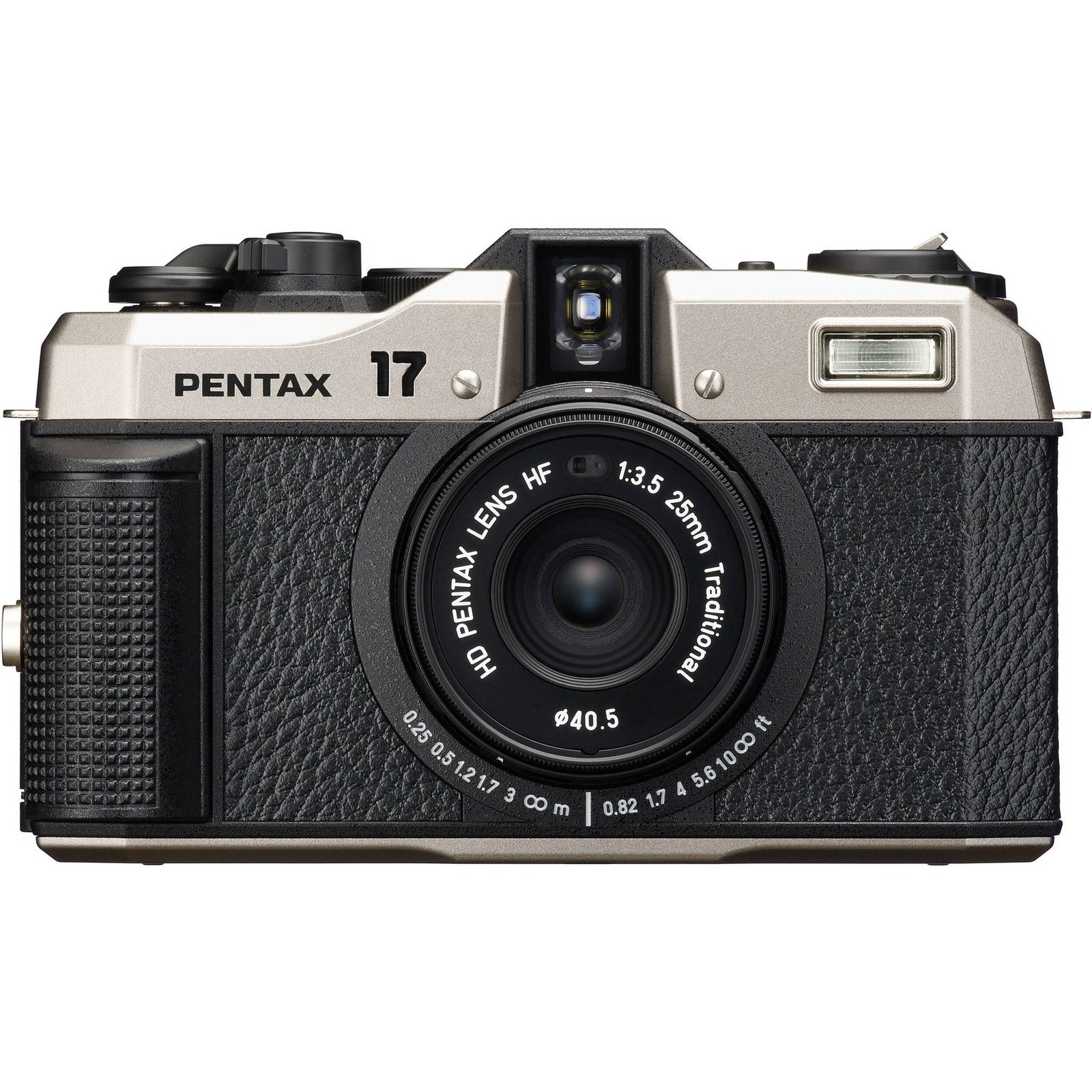
The camera review in our first issue goes to the Pentax 17. Long after the major camera companies shut down film camera production one after another, a new film camera finally arrived. And from Pentax, of all makers. It has been out for more than six months now, but for some people this little machine is still the yardstick for choosing a first film camera. Brisnap TV took it out and shot with it.
We needed a new film camera
In the late 2000s, most of the major camera companies announced they were ending film camera production. That is when the craving for a new film camera began. P&S(Point & Shoot, known in Korea as ttokttagi) cameras, the most widely used kind, are still around secondhand, but the popular models have long been selling for well above their original price. Even when you manage to find one, carrying around a time bomb that could break at any moment is a real source of stress.
Pentax is the one that answered that craving. When it first came out, the camera was so popular that people lined up to buy it. I filled it up one frame at a time and gave it a proper run.

What the name means, and the build quality
The "17" refers to the 17mm format, half the width of a 35mm frame. As Pentax has always done (the medium format 67 shoots 6×7cm), the model name is the frame size. In other words, it is a half-frame camera.

Pentax says it still has film camera engineers on staff, and it shows. The build quality is more than satisfying for the price. The exterior is mostly reinforced plastic, but everything your hand touches feels solid, with a matte finish. Expecting a metal body at this price would be greedy. Then again, it is nowhere near as flimsy as the cheap Chinese reusable cameras.


The design will divide people, but personally, I like it. It is small and light, and you can wear it around your neck all day without noticing. My one complaint is that you have to remove the front of the grip to put the battery in, and that part is all plastic, so it feels a little cheap to the touch. I wish they had covered it in leatherette, or sold it as a detachable accessory with a different feel.

Zone focusing, with pan focus for beginners
The most common failure in old automatic point-and-shoots is the motorized lens barrel. Over time, the cables break and it dies. I think that was part of why Pentax made the 17 a zone-focus camera.
It is zone focus, but in auto mode it shoots with pan focus, so even a beginner who has no idea what zone focusing is can use it without trouble. There is also a close-up mode, and used well, it can give you some nice background blur. A small but cute touch: use the strap that comes in the box as a guide to the 0.25m minimum focus distance, and you will land roughly in focus.

A generous 72 frames
Because it is a half-frame camera, a 36-exposure roll gives you 72 shots in total. If you came to photography through digital, 36 exposures can feel like a stingy spouse serving you half a bowl of rice because you are putting on weight. 72 frames is cold noodles served in a washbasin. Most of us are used to 36, so the first time you use the Pentax 17, you get to experience the magic of a roll that never seems to end.

If you are worried about half-frame image quality: unless you are making large prints or shooting for an exhibition, it handles social media and standard-size prints just fine. Shoot it in good daylight especially and you get pictures with a really nice feel. The colors are punchy and yet somehow soft.

And this camera's biggest charm is the continuity that only half frame gives you. With two shots side by side in one frame, you end up with diptychs you never planned. A latte in a café and the sky beyond it, a hand cutting a hamburger and the street across the road. Half frame does more than double your shot count. It is a camera that ties two scenes into one.
So, is it worth buying?
The secret of the two small squares in the viewfinder, a price comparison, and a verdict on whether the Pentax 17 really works as a "first film camera."
The Pentax 17's viewfinder is very bright and clear. Look inside and you will see two small squares, and at first I wondered what they were. They turned out to be parallax correction frames for close range. When you shoot at minimum focus distance in macro mode, you have to frame inside the small square, not the big one. It comes from the parallax between the finder and the lens...
The short answer: the Pentax 17 has a price that won't hurt, a cute and practical design, and the economy that comes with half frame. It is not perfect, but for anyone who wants a first taste of what shooting film feels like, it is a genuinely appealing choice.
These days I record my everyday moments with this camera, and it feels like more than just another camera. I hope this little machine helps film cameras seep back into the mainstream and lets more people discover what film has to offer. Here's to more brands taking on challenges like this.

More of the story in the magazine
The fuller version of this review (how the viewfinder works, a price comparison, film pairings and many more sample photos) runs in the camera review section of the first issue of 5ft magazine. The same issue also includes a review of Kodak UltraMax 400 and photographic work by Noh Ae-gyeong, Park Soon Yeol and Jang Hyeong-su.
- ● The two squares in the viewfinder: what they are and how to use them for macro
- ● Price and practicality compared with other film cameras
- ● More samples shot on Kodak ColorPlus 200 and JCH Street Pan 400
The full review is in the magazine
The complete Pentax 17 camera review, the Kodak UltraMax 400 film review and the work of three photographers are all in 5ft magazine Vol.01, our first issue.


